Correct tyre pressure is essential for safe and efficient driving. Tyres that are underinflated or overinflated can affect your steering, braking, fuel economy and the lifespan of the tyres themselves.
Fortunately, checking your tyre pressure only takes a few minutes. Regular checks can help you identify a problem before it results in uneven wear, a puncture or an unexpected breakdown.
If one of your tyres repeatedly loses pressure, Tyres Direct Mobile Tyres can inspect and replace it at your home, workplace or roadside location across Poole, Bournemouth and the surrounding Dorset areas.

Why Is Correct Tyre Pressure Important?
Your vehicle manufacturer recommends specific tyre pressures based on the vehicle’s weight, tyre size and expected load. Maintaining these pressures helps each tyre retain the correct shape and remain in even contact with the road.
Incorrect tyre pressure can affect:
- Braking performance
- Steering and cornering
- Fuel efficiency
- Ride comfort
- Tyre wear and lifespan
- Vehicle stability
According to the official UK Government vehicle safety guidance, both underinflated and overinflated tyres can adversely affect braking distance, steering, fuel efficiency and tyre life.
How Often Should You Check Your Tyre Pressure?
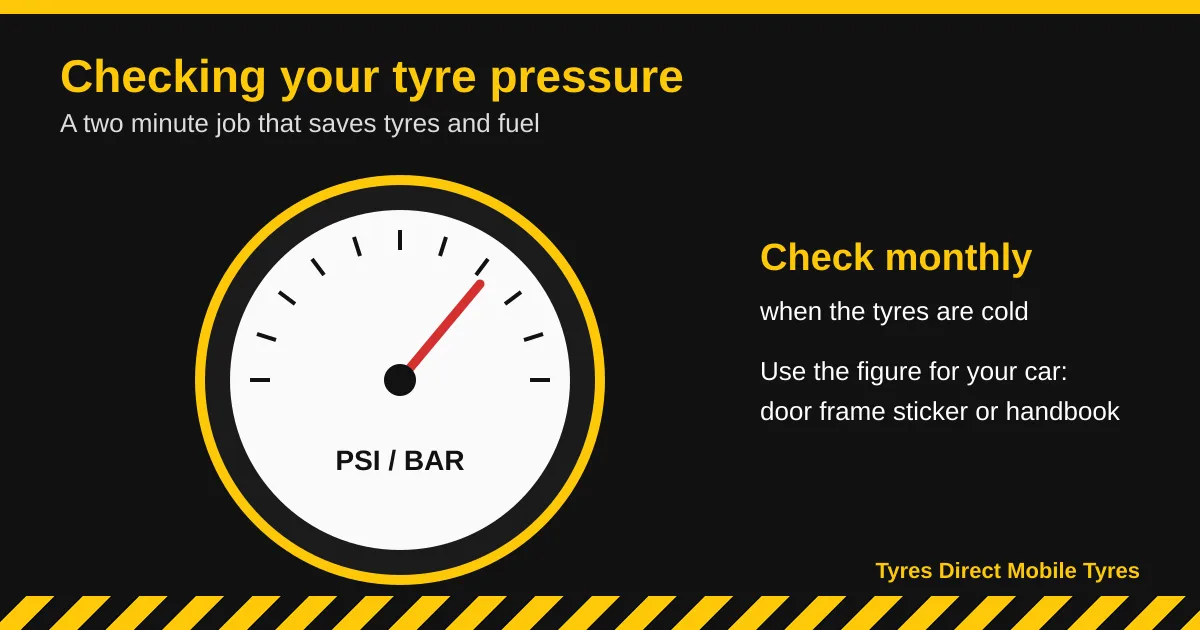
The Highway Code recommends checking tyre pressures weekly and before longer journeys. Pressure should be checked while the tyres are cold because warm tyres can produce a misleading reading.
You should also inspect your tyre pressures:
- Before a long journey
- Before carrying additional passengers or luggage
- After the vehicle has been unused for an extended period
- When a tyre pressure warning light appears
- If the vehicle begins pulling to one side
- If a tyre appears softer than the others
You can find more information in the Highway Code’s vehicle maintenance guidance.
Where Can You Find the Correct Tyre Pressure?
Do not use the maximum pressure printed on the tyre sidewall as your everyday inflation target. This figure relates to the tyre itself and may not be the recommended pressure for your particular vehicle.
The manufacturer’s recommended tyre pressures can usually be found:
- Inside the driver’s door frame
- Inside the fuel filler flap
- In the vehicle owner’s handbook
- In the manufacturer’s official vehicle information
Your vehicle may list different pressures for normal use and for journeys with a full load. Always use the appropriate recommendation for how the vehicle is being used.
How to Check Your Tyre Pressure
You can check your tyre pressure using a digital or manual pressure gauge. Many petrol stations also provide tyre inflation machines.
- Park the vehicle safely on level ground.
- Allow the tyres to cool before taking a reading.
- Find the manufacturer’s recommended pressure.
- Remove the valve cap from the first tyre.
- Press the gauge firmly onto the valve.
- Compare the reading with the recommended pressure.
- Add or release air as necessary.
- Check the pressure again.
- Replace the valve cap securely.
- Repeat the process for every tyre, including the spare if fitted.
If a tyre has been driven for some time, its temperature may raise the pressure reading. Avoid releasing pressure from a warm tyre solely to match the cold-pressure recommendation.
What Happens When Tyres Are Underinflated?
An underinflated tyre can flex more than intended while the vehicle is moving. This increases heat build-up and rolling resistance and may cause the outer areas of the tread to wear more quickly.
Common signs of underinflation include:
- A tyre that looks visibly soft
- Slower or heavier steering
- The vehicle pulling to one side
- Increased fuel consumption
- Wear along both outer edges of the tread
- A tyre pressure monitoring warning
A tyre that repeatedly loses air may have a slow puncture, leaking valve or a sealing problem around the wheel rim. Continually reinflating it without arranging an inspection does not resolve the underlying issue.
What Happens When Tyres Are Overinflated?
Overinflation can reduce the size of the tyre’s contact area with the road. This may create a firmer ride, reduce grip and cause the centre of the tread to wear faster than the surrounding areas.
Overinflated tyres may also be more vulnerable to damage when the vehicle encounters potholes, kerbs or road debris. Always adjust the pressure according to the vehicle manufacturer’s recommendation rather than estimating it.
Why Does My Tyre Pressure Warning Light Keep Appearing?
Many modern vehicles have a Tyre Pressure Monitoring System, commonly known as TPMS. This system alerts the driver when it detects a significant pressure change.
The warning may appear because of:
- A puncture or slow pressure loss
- Changes in outside temperature
- An incorrectly inflated tyre
- A damaged valve or sensor
- A replacement tyre that requires the system to be reset
Do not simply reset the warning without checking every tyre. If the light returns after the tyres have been correctly inflated, arrange a professional inspection.
Do Not Forget to Check the Tread
Pressure is only one part of tyre maintenance. While checking your tyres, inspect them for cuts, cracking, embedded objects, uneven wear and sidewall bulges.
Cars, light vans and light trailers must generally have at least 1.6mm of tread across the central three-quarters and around the entire tyre. The official UK vehicle safety guidance explains the applicable tread requirements.
You can also read our guide covering the signs that your car tyres need replacing.
Need Help With a Tyre That Keeps Losing Pressure?
If your tyre continues losing air, appears damaged or is no longer safe to use, avoid driving further than necessary.
Tyres Direct Mobile Tyres provides convenient mobile tyre fitting across Poole, Bournemouth and the surrounding Dorset areas. Our technicians can come to your home, workplace or roadside location to inspect the problem and fit a suitable replacement tyre when required.
Contact Tyres Direct Mobile Tyres today with your vehicle registration, tyre size, location and contact number to request a quote.